RIYADH, SAUDI ARABIA, May 1, 2026 /EINPresswire.com/ — As the Milken Institute Global Conference convenes in Los Angeles next week, one set of operational data from outside the United States is drawing attention in discussions on the future of cell therapy: King Faisal Specialist Hospital and Research Centre (KFSH) has reduced the cost of CAR-T cancer treatment at its facilities from approximately SAR 1.3 million (about $347,000) per case to around SAR 250,000 (about $67,000), while shortening manufacturing time from about 28 days to under 14.
The cost question sits at the center of the global debate on cell and gene therapy, where CAR-T treatments approved in the United States are typically priced between roughly $450,000 and $500,000 per infusion before supportive care, a level that has strained both commercial and public payers and limited referrals at many cancer centers.
KFSH has treated more than 200 patients with CAR-T therapy since 2020, initially relying on international manufacturing pathways that required shipping patient cells abroad and returning the engineered product under strict cold-chain conditions. In March 2025, the hospital administered its first dose of an in-house manufactured CD19-directed CAR-T therapy to a patient enrolled in a Phase I clinical trial for relapsed or refractory B-cell acute lymphoblastic leukemia, with the revised cost and time metrics reflecting this localized production model.
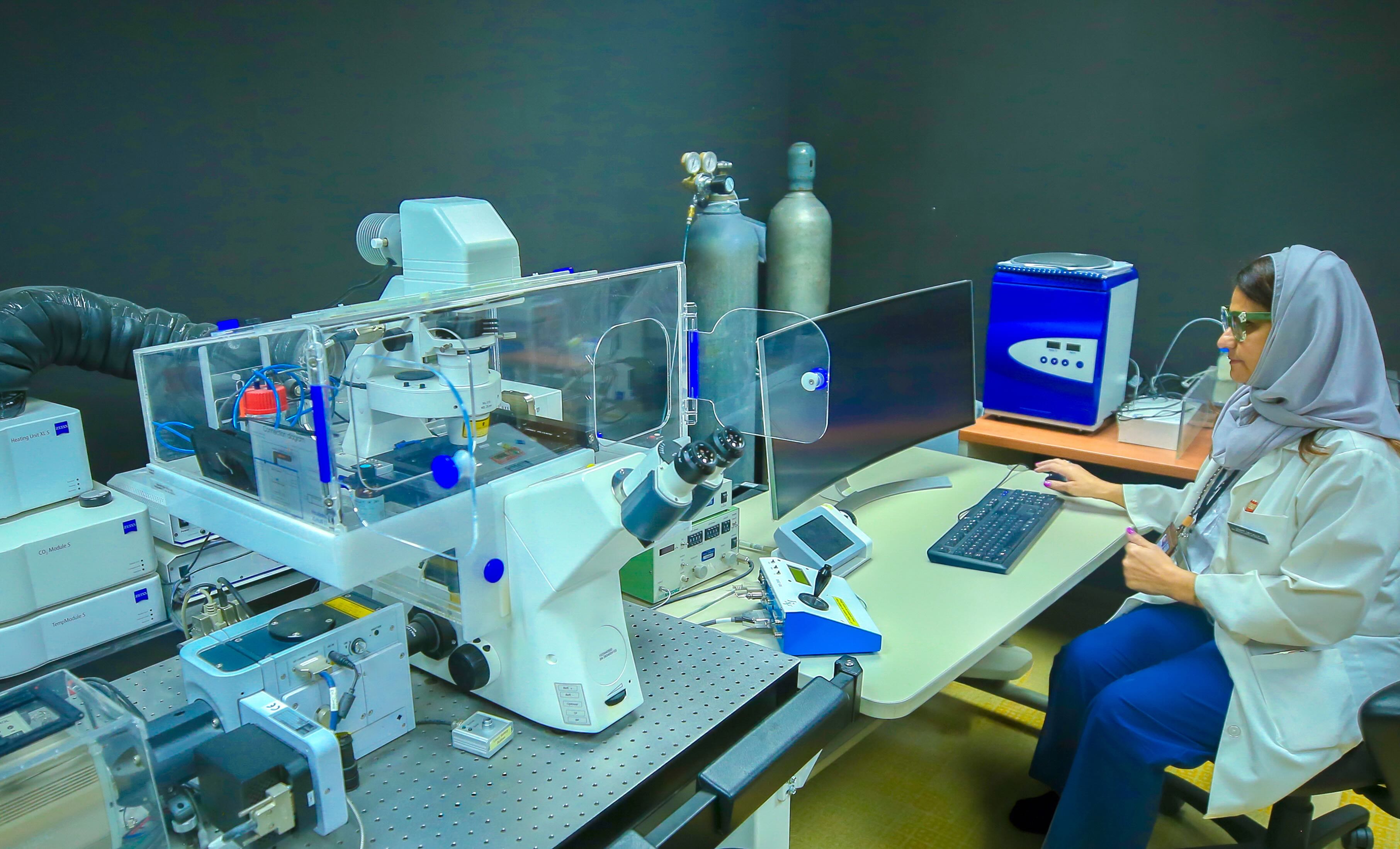
The shift to in-house manufacturing was enabled by the adoption of a closed, automated production system within the hospital, developed in collaboration with Miltenyi Biotec and under the supervision of the Saudi Food and Drug Authority, allowing for greater control over quality, timing, and logistics. The reduction in manufacturing time, from approximately 28 days to less than 14, carries clinical significance beyond operational efficiency, particularly for patients with aggressive disease, where delays between cell collection and reinfusion can determine eligibility for treatment or affect outcomes.
The broader implication aligns with a growing body of international research suggesting that point-of-care manufacturing, in which cell engineering takes place within the treating hospital rather than at centralized facilities, may represent one of the few viable pathways to materially reduce the cost of advanced therapies while maintaining clinical quality. The KFSH experience adds an operational data point to this discussion from an active clinical program.
KFSH is participating in the Milken Institute Global Conference 2026 as a Silver Sponsor, with the event taking place from May 3 to 6 in Los Angeles and bringing together leaders across healthcare, finance, technology, and public policy to examine the forces shaping the future of global health systems. Whether this cost structure can be replicated in other markets, particularly in the United States with its distinct regulatory, labor, and reimbursement environments, remains an open question; however, the program offers a working model of hospital-based cell therapy manufacturing at a time when the economics of cancer treatment are under increasing scrutiny worldwide.
King Faisal Specialist Hospital & Research Centre has been ranked first in the Middle East and North Africa and 12th globally among the world’s top 250 Academic Medical Centers for 2026 and recognized as the most valuable healthcare brand in the Kingdom and the Middle East according to Brand Finance 2025. It has also been listed by Newsweek among the World’s Best Hospitals 2026, the World’s Best Smart Hospitals 2026, and the World’s Best Specialized Hospitals 2026.
KFSH
Riyadh
email us here
Legal Disclaimer:
EIN Presswire provides this news content “as is” without warranty of any kind. We do not accept any responsibility or liability
for the accuracy, content, images, videos, licenses, completeness, legality, or reliability of the information contained in this
article. If you have any complaints or copyright issues related to this article, kindly contact the author above.

Media gallery