
As the global market environment continues to evolve, bag manufacturing is entering a new stage of development.
Shiling Town, China (PRUnderground) July 23rd, 2026
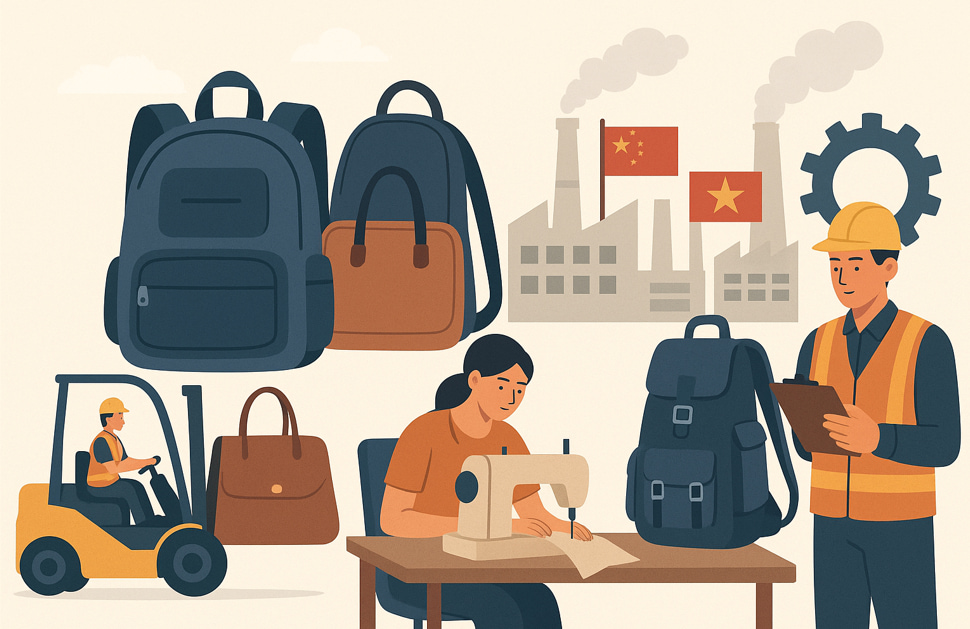
Over the past few decades, the development of the global bag manufacturing industry has primarily centered on large-scale production, cost optimization, and capacity expansion. For buyers, finding manufacturing partners with stable production capacity and cost advantages is a key objective in building a supply chain.
However, as the global market environment continues to evolve, bag manufacturing is entering a new stage of development.
Consumer demand is becoming increasingly diverse, while product life cycles are getting shorter, requiring brands to respond to market changes more quickly. Meanwhile, shifts in the global trade environment, changes in production costs, and growing concerns over supply chain risks are also influencing sourcing decisions made by companies worldwide.
1. Bag Supply Chains Are Shifting Toward More Flexible Models
In the past, many international brands adopted a relatively centralized procurement model. By maintaining a long-term partnership with a single supplier, buyers can secure a stable product supply and relatively controllable manufacturing costs. This model has driven the rapid development of the global bag industry over the past few decades.
However, as the market environment changes, traditional supply chain models face new challenges.
First, the pace of change in consumer demand is accelerating. Nowadays, brands need to launch new products faster and adjust their product strategies in a timely manner based on market feedback. This means that suppliers need not only production capabilities but also the ability to respond quickly to new product development.
This trend has also driven the growth of demand for small-batch orders. An increasing number of brands are testing market response through small-batch procurement and optimizing subsequent production plans based on actual sales performance. As this flexible procurement model becomes increasingly widespread, buyers are paying greater attention to whether manufacturers possess flexible production capabilities.
Furthermore, supply chain stability is receiving increasing attention. Rising uncertainty in global markets—driven by factors such as changes in trade policy, tariff adjustments, and increasing production costs—has prompted buyers to re-evaluate their supply chain configurations.
Therefore, buyers are no longer looking merely for factories with production capabilities, but rather for partners capable of providing flexible manufacturing solutions and a stable supply chain.
2. Multi-Location Supply Chains Are Emerging as a New Strategy for Global Buyers
As supply chain conditions continue to evolve, more companies are adopting multi-location manufacturing strategies to build more flexible and resilient supply networks. This model is not simply about seeking new low-cost production locations; rather, it involves establishing a more flexible and efficient supply system by leveraging the complementary strengths of different manufacturing bases.
Multi-regional supply chains can help brands achieve improvements in three areas:
- Reduce Supply Chain Risk
By adopting a decentralized production layout, manufacturers can reduce their reliance on a single region and maintain more stable supply capabilities in the face of market changes.
- Enhance Order Flexibility
A multi-regional manufacturing system enables buyers to select production solutions that better align with product lifecycles and order volumes. For newly developed products, buyers can prioritize manufacturing facilities with strong product development capabilities and small-batch production flexibility. For mature products with stable demand, they can leverage large-scale production capabilities to improve efficiency.
- Optimize Overall Procurement Efficiency
Multi-location supply chains are not just about adjusting production locations; more importantly, they enable better coordination across product development, material sourcing, manufacturing, and quality management. They help buyers reduce supply chain communication costs, improve product development efficiency, and achieve more stable delivery performance.
3. China and Vietnam Become Key Collaborative Manufacturing Regions for Global Bag Production
As global bag supply chains continue to evolve, China and Vietnam are gradually forming a complementary manufacturing partnership.
China: Strong Product Development and Manufacturing Capabilities
China has long been a major global manufacturing hub for bags. Leveraging a comprehensive industrial chain, abundant material resources, and mature manufacturing expertise and quality management systems, China maintains a competitive edge in the development and complex manufacturing of bags.
Vietnam: An Important Manufacturing Base for Supply Chain Diversification and Cost Optimization
As its manufacturing infrastructure continues to improve, Vietnam is demonstrating increasing value in undertaking the production of mature products, optimizing manufacturing costs, and diversifying supply chain risks. For products with completed development, mature manufacturing processes, and stable demand, manufacturing in Vietnam offers support for large-scale production, helping buyers optimize their overall supply chain footprint.
4. OEM/ODM Capabilities Become a Key Factor in Supplier Selection
As market competition intensifies, brands are launching new products more frequently, and buyers are increasingly expecting suppliers to move beyond being production executors and become product development partners. An increasing number of brands want manufacturers to participate in the product development stage, including:
- Product concept analysis
- Structural design optimization
- Material selection recommendations
- Sample development and testing
Manufacturers with OEM/ODM capabilities can help brands rapidly transform products from concept into production-ready solutions. For buyers, selecting a manufacturing partner with OEM/ODM capabilities not only shortens time-to-market for new products and reduces development risks but also fosters a more stable and efficient long-term supply chain partnership.
5. HPhope: Supporting Global Customers Through China-Vietnam Manufacturing Collaboration
Leveraging a collaborative manufacturing network spanning China and Vietnam, HPhope provides global brands, wholesalers, and buyers with integrated OEM/ODM bag manufacturing solutions, covering everything from product development to mass production.
Among them, the China production base leverages a mature supply chain and manufacturing expertise in the bag industry, focusing on product development, process optimization, material selection, and quality management. The Vietnam manufacturing base leverages flexible production capabilities and favorable trade conditions to help customers optimize their supply chains. It provides more options for mature product manufacturing and export market cost optimization.
Currently, HPhope’s production bases in China and Vietnam employ over 1,500 people, providing OEM/ODM bag manufacturing services to clients from more than 90 countries.
About HPhope Bag
HPhope is a professional OEM/ODM bag manufacturer with factories in China and Vietnam. We specialize in customized handbags, backpacks, and outdoor bags, delivering reliable sourcing solutions from product development to large-scale production.
The post HPhope Global Bag Manufacturing Enters a New Era of Supply Chain Transformation first appeared on
Original Press Release.


