AndaSeat Positions X-Air Series Around a Growing Summer Concern: Heat Burden in Indoor Workstations
SPOKANE, WA, UNITED STATES, June 22, 2026 /EINPresswire.com/ — AndaSeat is highlighting its X-Air Series as part of a broader response to an issue that has become more visible in recent weeks: as heat risk rises across parts of the United States and more consumers continue to spend long hours indoors, workstation comfort is being judged not only by support and adjustability, but also by how much a chair contributes to heat buildup in the room and at the body-contact surface.
That concern is arriving at a moment of heightened public attention to heat. NOAA’s Climate Prediction Center has flagged a moderate risk of extreme heat for the Mid-Atlantic in the June 29 to July 2 period and a slight risk of extreme heat across additional regions including the Southern Plains, Gulf Coast states, Southeast, and central High Plains. Separate NOAA climate reporting also noted that the April 2025 to March 2026 period was the warmest 12-month span on record for the contiguous United States. These developments have kept heat and heat-related living conditions in active public discussion.
EPA guidance adds another layer to that conversation. The agency states that people spend about 90% of their time indoors and notes that ventilation and shading can help control indoor temperatures. CDC and NIOSH materials similarly state that both outdoor and indoor workers exposed to extreme heat or hot environments may be at risk for heat-related illness, and list limited air movement among the risk factors that can worsen heat burden.
In that context, consumers are beginning to treat seating differently. The question is not only whether a chair provides ergonomic support. It is increasingly whether the chair adds density, retained heat, or a closed-in feel to a desk area that is already warm. AndaSeat said the X-Air Series was developed with that broader expectation in mind.
Why Indoor Heat Has Become a Workstation Issue
In many homes, desk setups are no longer used for only short, occasional sessions. They are used for work, communication, studying, gaming, media viewing, and general device time over the course of a full day. When outdoor temperatures rise or air circulation indoors is limited, the chair becomes one of the most constant body-contact surfaces in that environment.
This changes how consumers interpret comfort. A chair may offer adjustment features and support, but if it traps heat around the back, seat, and headrest, users can still feel less at ease over time. In hotter periods, discomfort may come not only from posture but from the combined effect of prolonged contact, reduced airflow, and the feeling that the workstation holds warmth instead of releasing it.
That is why heat is no longer only a weather story. It is also becoming a workstation story. Buyers are increasingly asking whether a chair can support daily use while reducing the thermal heaviness that some more enclosed seating can bring.
The Consumer Pain Point Behind X-Air Series
One of the more familiar frustrations in warm-weather desk use is that a chair may begin to feel hotter and more restrictive the longer it is used. Even when the room itself is manageable, the seating surface can become part of the discomfort. In practical terms, this may lead users to shift more often, lean away from the backrest, interrupt focus, or simply avoid using the chair for as long as they otherwise would.
CDC and NIOSH do not frame workstation chairs as heat-safety devices, but their public guidance does make the broader point that heat exposure, hot environments, and limited air movement matter. When applied to indoor desk life, that suggests consumers are reasonable in paying more attention to whether large furniture surfaces help or hinder airflow around the body.
AndaSeat said this was one of the main reasons the X-Air Series was designed around all-mesh construction. The company is effectively positioning the product as a response to the reality that seating itself can become part of the indoor heat burden during warmer periods.
How AndaSeat Frames X-Air Series
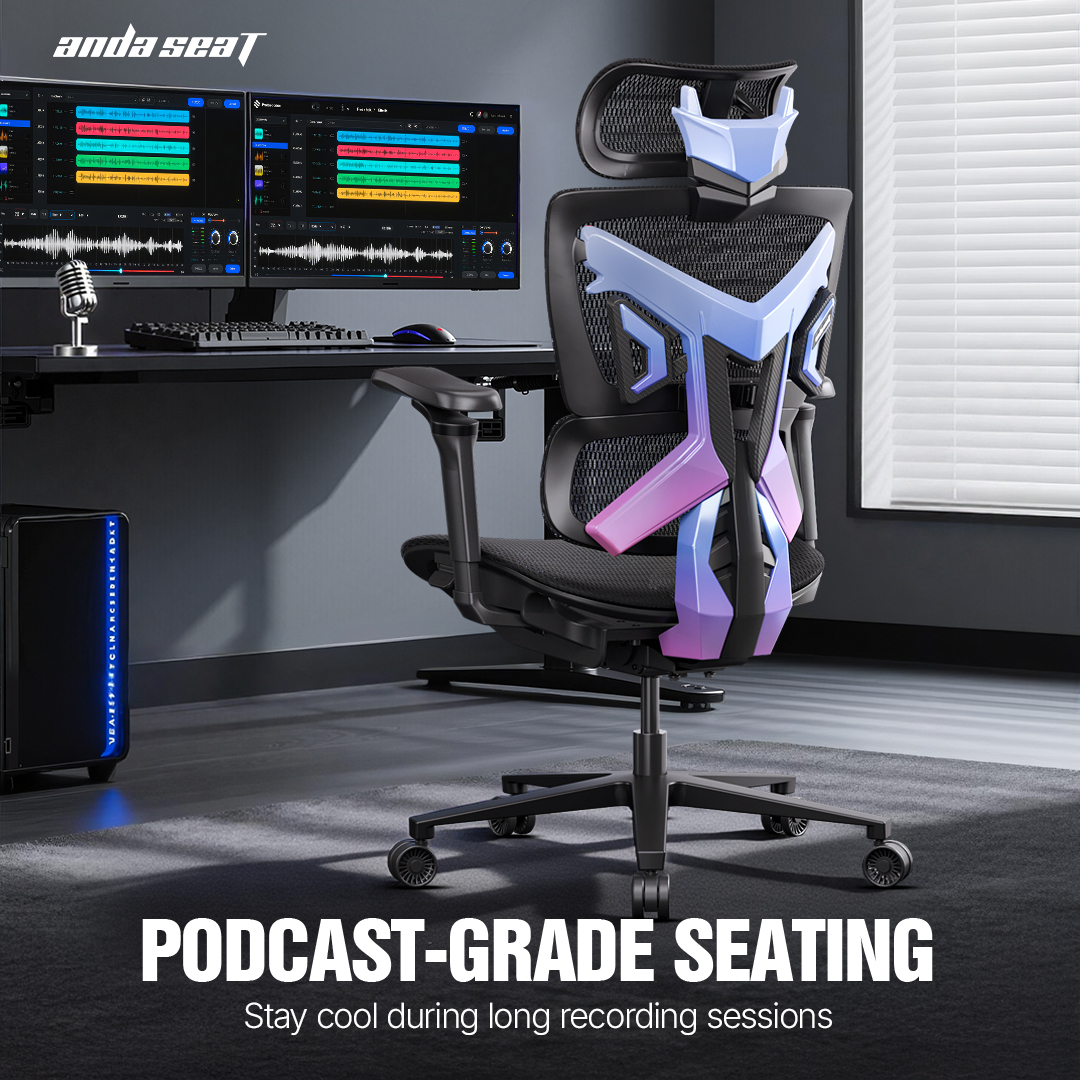
According to AndaSeat, the X-Air Series is a mesh chair line developed for work and play, with the design centered on airflow across the chair’s major contact zones. The company states that the series uses an all-mesh design across the seat, back, and headrest, creating a more open structure intended to allow air to move more freely around the body.
In product terms, this means the X-Air story is not being framed only around general ergonomics. It is also being framed around thermal management at the seating surface. AndaSeat describes the chair as an “ultra-breathable” option intended to feel lighter and more open than more enclosed seating forms, particularly during extended use or in warmer settings.
The company also identifies the series with a C-shaped dynamic lumbar integrated into the backrest, a 3D headrest, 4D armrests on X-Air, 5D armrests on X-Air Pro, and a backrest recline range of 105° to 126°. In this release, however, those features support the larger point rather than replace it: the chair is being presented as an ergonomic mesh product that aims to reduce the heat-retaining feel of traditional dense seating while still maintaining full workstation usability.
Why the Mesh Structure Matters More in a Heat Conversation
The all-mesh structure matters because it changes both air movement and visual density. A more open chair profile can help reduce the perception that the desk area is crowded, insulated, or built around thick contact surfaces. During warmer periods, that can affect how the workstation feels even before the user begins adjusting posture or recline.
AndaSeat states that the X-Air mesh is woven with a flannel mixture and tested through a 10,000-cycle abrasion and durability test, positioning it not as a lightweight compromise but as a material intended to balance airflow with everyday structural use. This is important in editorial terms because it shifts the mesh discussion away from “summer chair” language and toward the broader idea of a chair that is better suited to prolonged indoor use when heat burden becomes more noticeable.
Mid-Year Promotion and the Added Lumbar Pillow
AndaSeat is currently attaching a mid-year exclusive lumbar pillow offer to the X-Air Series. In practical terms, this creates a more complete product story around two parallel expectations: consumers want a chair that feels more ventilated during warm periods, but they do not want to give up back support in order to get that openness.
That is why the lumbar-pillow inclusion fits the release. The all-mesh chair addresses the heat and airflow side of the problem, while the added lumbar accessory helps reinforce that breathable seating does not have to mean reduced support presence. Together, they position the X-Air Series as a response to a current consumer tension: users increasingly want cooler-feeling seating, but they still expect it to remain viable as an everyday workstation chair.
Why This Product Story Matters Now
What distinguishes the X-Air Series story from a generic product feature release is the specificity of the issue it addresses. This is not only a story about a mesh chair being breathable. It is a story about why that characteristic matters more right now, when public attention is returning to heat risk, indoor air movement, and the strain of spending long periods in enclosed environments.
As more consumers follow heat forecasts, adjust indoor routines, and think more carefully about how their homes feel during prolonged warm spells, the workstation is becoming part of that conversation. In that context, X-Air is being positioned as a chair developed for a more current expectation: support should remain present, but the chair should contribute less heat, less density, and less thermal drag to the room.
About X-Air Series
The AndaSeat X-Air Series is a mesh chair line developed for work and play. According to the company, the series includes all-mesh construction across the seat, back, and headrest; a C-shaped dynamic lumbar design; 3D headrest adjustment; 4D or 5D armrest options depending on model; recline from 105° to 126°; and a design intended to deliver a lighter, more ventilated seating experience. The company is currently offering a mid-year exclusive lumbar pillow promotion with X-Air purchases.
About AndaSeat
Founded in 2007, AndaSeat develops ergonomic furniture products for gaming, work, and home environments. Its product portfolio includes ergonomic chairs, desks, and related workspace products designed for hybrid users, home setups, and gaming spaces.
Caroline Chen
AndaSeat
+ + 86 139 2232 2347
email us here
Visit us on social media:
LinkedIn
Instagram
Facebook
YouTube
TikTok
X
Legal Disclaimer:
EIN Presswire provides this news content “as is” without warranty of any kind. We do not accept any responsibility or liability
for the accuracy, content, images, videos, licenses, completeness, legality, or reliability of the information contained in this
article. If you have any complaints or copyright issues related to this article, kindly contact the author above.

Media gallery