
Key Takeaways
- The gut and brain are locked in constant, two-way communication through a network of nerves, hormones, and immune signals — meaning what happens in the gut doesn’t stay in the gut.
- About 90% of the body’s serotonin is produced in the gut. While this gut-derived serotonin does not directly cross the blood-brain barrier to influence mood in the brain, its production is heavily influenced by gut microbiota and it plays a crucial role in gut function, indirectly impacting mood regulation through pathways like the vagus nerve and immune system.
- An imbalanced gut microbiome (dysbiosis) has been consistently linked to anxiety and depression — and animal studies have shown gut bacteria can actually transfer mood disorders between individuals.
- Diet is one of the most powerful levers for reshaping gut chemistry, with fermented foods and probiotics showing real promise as mood-supporting tools.
- Vagus nerve stimulation — a therapy that targets the gut-brain highway — is already FDA-approved for treating depression, and the science behind why it works is fascinating.
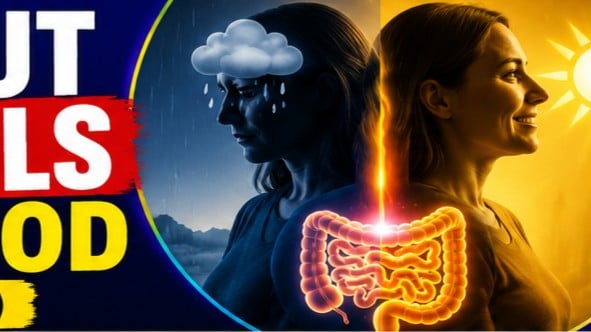
There’s a reason a stressful day can knot your stomach — or why a bad meal can put a person in a genuinely foul mood. That connection isn’t coincidence or imagination. It’s biology, and the neuroscience behind it is more intricate than most people realize. The gut and brain are in constant dialogue, and the state of one has measurable consequences for the other.
Your Gut Is Essentially a Second Brain
The gut houses what scientists call the enteric nervous system (ENS) — a sprawling network of neurons lining the gastrointestinal tract, estimated to contain between 200 and 600 million neurons. This is generally considered to be more neurons than exist in the entire spinal cord, which contains approximately 100 million neurons. The ENS operates largely independently, regulating digestion, gut motility, and local immune responses without waiting for instructions from the brain upstairs.
This is why gastroenterologists and neuroscientists alike have taken to calling the gut a “second brain.” It doesn’t process thoughts or emotions the way the brain does, but it does sense, respond, and signal — constantly. The gut’s neural activity feeds information upstream and receives commands back in a loop that never fully switches off.
Channels like The Reel Deal have been breaking down exactly this kind of science — translating complex neuroscience into accessible content for people who want to understand what’s actually happening inside their bodies, not just take someone’s word for it.
The Gut-Brain Highway Explained
A Two-Way Communication Network
The gut-brain axis is the formal name for the bidirectional communication system linking the central nervous system (CNS) with the gastrointestinal tract. It’s not a single pathway but a layered network operating across four distinct channels:
- Neural pathways — direct nerve connections, primarily through the vagus nerve
- Endocrine pathways — hormones secreted by gut cells that enter the bloodstream and influence the brain
- Immune pathways — immune signals originating in gut tissue that affect brain inflammation
- Humoral pathways — chemical messengers, including neurotransmitters produced in the gut, that travel through the blood
This system runs in both directions. The brain sends signals down that influence gut motility, secretion, and immune activity. The gut sends signals up that shape mood, stress responses, and even decision-making. Neither end is just a passive receiver.
The Vagus Nerve: Your Body’s Direct Hotline
Of all the communication channels in the gut-brain axis, the vagus nerve is the most direct. It’s the longest cranial nerve in the body, stretching from the brainstem all the way down through the chest and into the abdomen. Think of it as a two-lane highway: one lane carries sensory data from the gut up to the brain, and the other carries motor signals back down.
What makes the vagus nerve especially significant is the traffic imbalance on that highway. Roughly 80-90% of vagal fibers are afferent — meaning they carry information from the gut to the brain, not the other way around. The gut is, in a very literal sense, constantly briefing the brain on its condition. Gut inflammation, microbial imbalance, and nutrient status all get reported upward in real time.
Gut Microbes Are Manufacturing Mood Chemicals
90% of Serotonin Comes From Your Gut
Serotonin is widely known as the brain’s “feel-good” neurotransmitter — the chemical targeted by most antidepressants. What’s far less commonly known is that approximately 90% of the body’s serotonin is produced not in the brain, but in the gut. Specifically, it’s synthesized by enterochromaffin cells lining the gastrointestinal tract, with production heavily influenced by gut microbiota. Importantly, this gut-derived serotonin does not directly cross the blood-brain barrier; rather, it influences mood indirectly through the vagus nerve, immune signaling, and its central role in gut function itself.
Gut bacteria don’t just passively exist alongside this process — they actively regulate it. Certain bacterial strains stimulate serotonin production, while others suppress it. This means the composition of the gut microbiome has a direct bearing on how much serotonin the body is making at any given time — which in turn affects mood, sleep quality, and appetite regulation.
Dopamine, GABA, and Glutamate: Also Made Below
Serotonin isn’t the only mood-regulating chemical with gut origins. Research has identified that gut microbes also contribute to the production of several other key neurotransmitters:
- Dopamine — associated with motivation and reward; research suggests that gut microbes contribute to its production, with some sources indicating roughly 50% of the body’s dopamine supply may originate in the gut
- GABA (gamma-aminobutyric acid) — the brain’s primary inhibitory neurotransmitter, responsible for calming neural activity and reducing anxiety
- Glutamate — a major excitatory neurotransmitter involved in learning, memory, and neural signaling
These aren’t trace amounts or peripheral contributions. The gut is a genuine neurochemical production facility, and disruptions to the microbial environment that supports it have measurable downstream effects on brain chemistry.
When the Gut Breaks Down, So Does Mood
Dysbiosis and Its Link to Anxiety and Depression
Dysbiosis refers to an imbalance in the composition of the gut microbiota — too many harmful bacteria, too few beneficial ones, or a loss of microbial diversity overall. It’s a common consequence of poor diet, chronic stress, antibiotic use, or illness. And the mental health consequences are well-documented.
Multiple studies have found consistent associations between dysbiosis and heightened rates of anxiety and depression. Part of this is neurochemical — a disrupted microbiome produces less serotonin, GABA, and dopamine. But dysbiosis also drives chronic low-grade systemic inflammation, which creates a separate pathway for mood disruption.
How Gut Inflammation Reaches the Brain
When the gut is inflamed — whether from infection, chronic stress, or a diet high in ultra-processed foods — it releases pro-inflammatory cytokines into the bloodstream. These immune signaling molecules can cross the blood-brain barrier and trigger neuroinflammation.
Neuroinflammation, in turn, interferes with neurotransmitter synthesis, disrupts the function of brain regions involved in mood regulation (like the prefrontal cortex and amygdala), and has been linked to both the onset and persistence of depression. This inflammation-to-mood pathway helps explain why people with chronic inflammatory conditions — like irritable bowel syndrome or Crohn’s disease — experience disproportionately high rates of anxiety and depression.
The Science Proving Gut Bacteria Drive Behavior
Germ-Free Mice and Stunted Brain Development
Some of the most compelling evidence for the gut-brain connection comes from animal research. Scientists have raised mice in completely sterile conditions — entirely free of gut microbiota from birth. The results are striking.
Germ-free mice consistently show abnormal stress responses, elevated anxiety-like behaviors, and impaired social development. Brain regions involved in emotional regulation develop differently in the absence of gut microbiota. When these mice were later colonized with bacteria, some — but not all — behavioral abnormalities could be reversed, suggesting that microbial presence during early development is particularly critical for healthy brain formation.
Fecal Transplants That Transferred Depression to Rats
Perhaps even more striking is research involving fecal microbiota transplants (FMT). In controlled studies, gut bacteria collected from humans diagnosed with major depressive disorder were transplanted into healthy rats. The outcome: the recipient animals began displaying measurable depression- and anxiety-like behaviors — reduced exploration, increased helplessness, and altered stress hormone levels, with some studies noting a stronger link to depressive-type behaviors than anxiety-type behaviors.
This isn’t merely correlation. It’s a causal transfer of mood-related behavior through gut bacteria alone. The rats received no psychological trauma, no drug exposure — only a shift in their microbiome. It stands as some of the strongest direct evidence that the gut microbiome doesn’t just correlate with mood disorders — it can actively produce them.
Diet Directly Reshapes Your Gut-Mood Chemistry
High Fat and Carb Diets Increase Anxiety Risk
The gut microbiome isn’t fixed — it changes in response to what’s eaten, sometimes within days. Research has consistently shown that diets high in saturated fat and refined carbohydrates shift microbial composition in ways that are harmful to mood. These dietary patterns reduce the diversity of beneficial bacteria, promote the growth of inflammatory microbial strains, and suppress the production of key neurotransmitters.
Studies examining dietary patterns across populations have found that higher intake of fat and refined carbohydrates is associated with measurably increased rates of anxiety and depression. This isn’t just about weight or metabolic health — the gut-to-brain signaling disruption is a distinct and significant mechanism.
Fermented Foods and Probiotics as Mood Support
On the flip side, dietary interventions that support a healthy, diverse microbiome show real promise for mood. Fermented foods — yogurt, kefir, kimchi, sauerkraut, kombucha — introduce live beneficial bacteria directly into the gut. Prebiotic foods rich in fiber (garlic, onions, bananas, oats) feed and sustain existing beneficial populations.
Clinical research on probiotics — the beneficial bacteria found in these foods, also available in supplement form — has shown meaningful effects on stress, anxiety, and depressive symptoms. These aren’t miracle cures, but the data supports their role as a legitimate mood-supporting tool when used as part of a broader dietary approach. The mechanism runs directly through the gut-brain axis: more beneficial bacteria means more serotonin, better-regulated inflammation, and a more balanced neurochemical environment.
Vagus Nerve Stimulation Is Already Treating Depression
The vagus nerve’s role in the gut-brain axis isn’t just a fascinating biological fact — it’s already being harnessed therapeutically. Vagus nerve stimulation (VNS) is an FDA-approved treatment for both epilepsy and treatment-resistant depression. A small device, similar in concept to a pacemaker, is implanted near the collarbone and delivers regular electrical pulses to the vagus nerve.
Those pulses travel up to the brain, modulating activity in regions like the locus coeruleus (which regulates norepinephrine release) and the raphe nuclei (which regulate serotonin). The result, in many patients, is a meaningful reduction in depressive symptoms — often in cases where medication and therapy had failed.
Non-invasive VNS techniques are also under active investigation, including transcutaneous auricular VNS (taVNS), which stimulates the nerve through the outer ear. The fact that directly stimulating the gut-brain communication line can alleviate depression isn’t just clinically useful — it’s powerful confirmation that the gut-brain axis is a real, functional, and modifiable system.
A Healthier Gut Is a Measurable Path to Better Mental Well-Being
The science is no longer speculative. The gut-brain axis is a well-characterized, multi-pathway communication network with direct and measurable effects on mood, stress response, and mental health. Gut bacteria produce the majority of the body’s serotonin and dopamine. Microbial imbalance drives both neurochemical disruption and systemic inflammation. Dietary changes shift microbiome composition in ways that alter mood outcomes. And manipulating the vagus nerve — the primary physical conduit between gut and brain — can treat depression in clinical settings.
What this means practically is that mental well-being isn’t managed through brain chemistry alone. The gut is an active participant. Prioritizing gut health through diet — reducing highly processed foods, increasing fiber, incorporating fermented foods, and where appropriate using targeted probiotics — creates measurable changes in the chemical environment the brain depends on. It’s not a replacement for mental health treatment, but it is a scientifically grounded, modifiable lever that most people have direct access to.
The gut-mood connection is one of the most exciting frontiers in modern neuroscience, and understanding it at a mechanistic level changes how the entire conversation around mental health gets approached — from treatment to daily habits.
For more science-driven breakdowns of health topics like this, The Reel Deal delivers engaging, research-backed content that makes complex biology genuinely accessible.
The Reel Deal
30300 Antelope Road
Unit 1426
Menifee
CA
92584
United States


