ZHENJIANG, JIANGSU, CHINA, August 13, 2026 /EINPresswire.com/ — The ophthalmic lens industry has moved through a real technological shift as prescriptions grow more complex and wearer expectations rise. For decades, conventional surfacing methods — matching preset tool templates against semi-finished blanks — met the basic needs of the market.
Today’s demand for more precise, individualized correction has pushed independent labs and high-volume manufacturers toward Digital Surfaced RX Lenses, which remove several of the physical constraints of mechanical grinding. This article compares the two approaches directly, with a focus on what changes for RX labs, optical chains, and wholesale buyers evaluating a supplier’s surfacing capability.
Digital CNC Surfacing vs. Conventional Lap Grinding
Conventional surfacing relies on mechanical lap grinding, using generic master tools to shape the rear surface of an optical blank, and remains capable of producing lenses that meet standard prescription requirements. Its main limitation is flexibility: this contact-based abrasive process relies on predefined tooling geometry, which makes it less suited to complex surfaces, individualized parameters, and progressive designs — the areas where digital freeform surfacing offers the clearest advantage. Mechanical lap tools also wear over time, which can introduce subtle variation across production shifts.
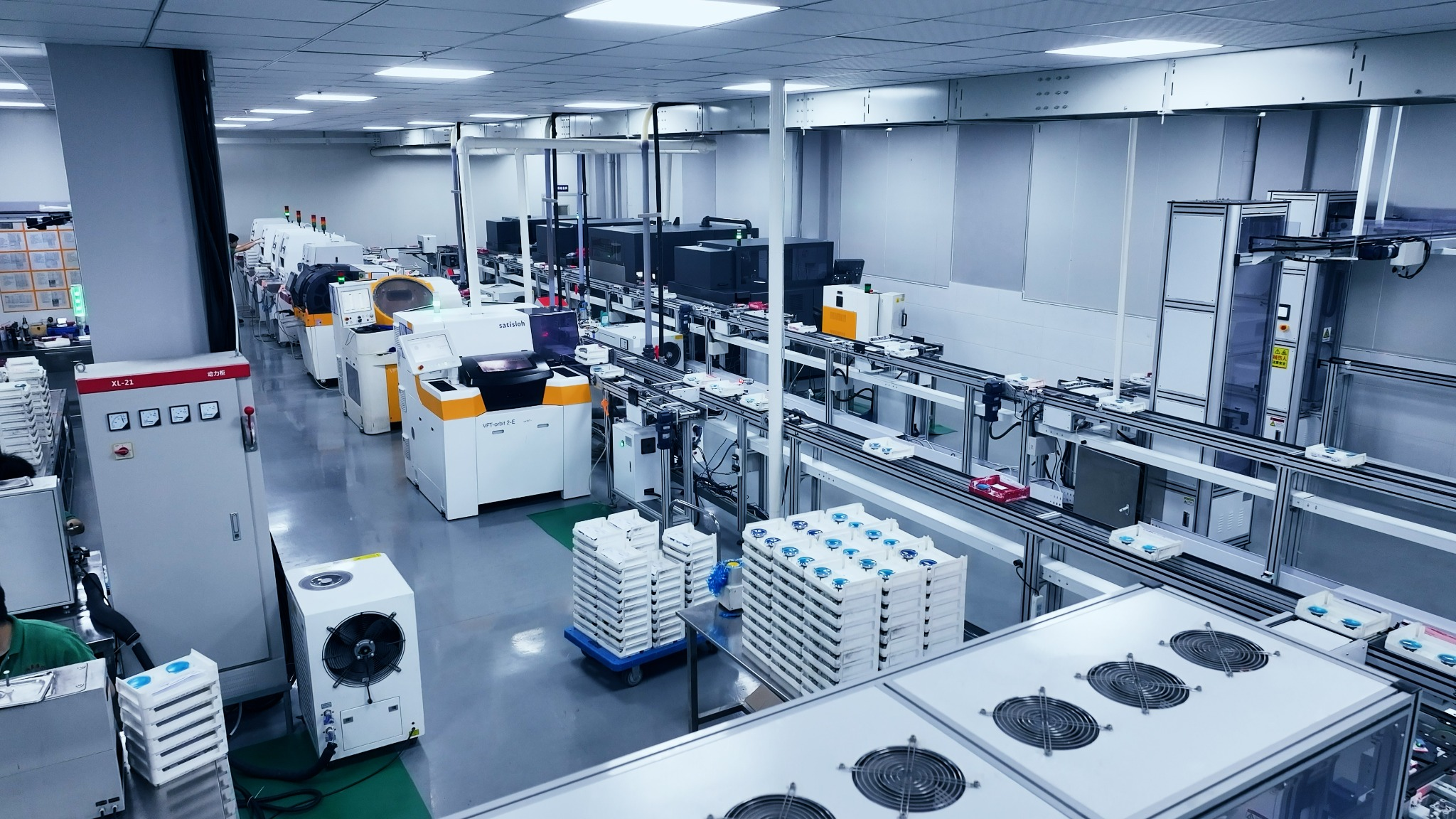
Digital freeform surfacing takes a different approach, using multi-axis CNC single-point diamond cutting to shape the posterior surface directly from calculated coordinates rather than pressing the lens against a fixed mold. The VFT-orbit-2i performs high-precision digital lens surfacing, while the Multi-FLEX-2 provides flexible automated polishing for a broad range of RX geometries — together enabling custom geometric profiles on each lens with smooth topographical transitions that are difficult to achieve with traditional tooling-based processes, and without depending on a physical tool inventory for every prescription variant.
Equipment Supporting HONGCHEN Digital RX Production
A modern RX laboratory depends not only on lens-design software, but also on reliable digital generating and automated polishing equipment. HONGCHEN Optical operates three Schneider HSC Modulo ONE high-speed freeform generators, alongside Satisloh VFT-orbit-2i digital generating equipment and Multi-FLEX-2 fully automated polishing systems.
The HSC Modulo ONE and VFT-orbit-2i serve as complementary digital generating platforms rather than consecutive processing steps. The HSC Modulo ONE combines high-performance milling and turning within an advanced kinematic platform, while the VFT-orbit-2i adds intelligent B-axis monitoring, diagnostic data, and predictive-maintenance functions.
After digital generation, the Multi-FLEX-2 uses independently controlled polishing chambers and dynamic kinematics to adapt the polishing process to different RX geometries and lens diameters. This equipment mix gives HONGCHEN Optical greater flexibility across different lens materials, complex prescription geometries, and varied production requirements.
Correcting Peripheral Distortion in Progressive Corridors
A core goal of digital surfacing is to manage peripheral unwanted astigmatism and distortion more effectively. When a wearer looks away from the optical center of a conventional lens, light strikes the surface at an oblique angle, producing a distortion known as oblique astigmatism that narrows the usable field of view. In conventional progressive designs, this can show up as a noticeable cylinder drift and a disorienting “swim effect” during lateral eye movement, largely because conventional front-surface progressive designs offer less opportunity to optimize the back surface for each individual prescription.
Point-by-point back-surface calculation addresses this by optimizing local curvature across thousands of individual points on the lens, helping reduce peripheral distortion before light reaches the eye. HONGCHEN Optical offers 1.56 freeform progressive lenses with photochromic and HMC options for general-use programs, while premium configurations can provide wider intermediate and near-vision zones depending on the selected design.
High-Power Customization for Complex Prescriptions
Advanced prescription fulfillment needs a system that handles extreme corrections without sacrificing cosmetic appearance. Conventional molded inventory tends to struggle with highly asymmetric prescriptions, high astigmatism, or wrap-around sports frames, where standard high-diopter lenses become excessively thick and produce noticeable magnifying distortion.
HONGCHEN Optical’s digital freeform process merges variable addition zones smoothly, creating smoother transitions between vision zones and supporting specialized configurations such as single-vision high power and special-base lens designs.
Depending on the selected progressive design and the available fitting data, freeform calculations may incorporate parameters such as vertex distance, pantoscopic tilt, and frame wrap to fine-tune each lens’s surface profile, helping the final focal points align with how the frame will actually sit on the wearer’s face. For labs handling a wide range of complex prescriptions, this level of customization can help reduce remakes and non-adaptation complaints.
The Production Infrastructure Behind Digital Surfacing
Executing this kind of precision work at scale requires a controlled production environment. HONGCHEN Optical runs its digital surfacing lines inside a climate-controlled facility that limits dust and airborne particulates, which could otherwise interfere with diamond-point milling. Controlled workflows and reduced manual intervention help improve consistency and reduce production variation, including for complex, fully customized orders.
Digital RX workflows help transfer prescription information from partner labs into production processes while reducing unnecessary manual entry, supporting efficient turnaround for customized orders. For RX labs and optical chains evaluating a supplier’s technical capability, the combination of named, verifiable equipment and a controlled production environment is a more useful benchmark than general precision claims.
Beyond the equipment itself, HONGCHEN Optical’s RX capability spans multiple design tiers — from standard single-vision and basic progressive designs to premium freeform and office-lens configurations — with the option to combine high-index materials, photochromic performance, and blue-light filtration within the same order.
Standard RX orders can be completed in as little as 48 hours depending on lens material, design, coating, and order requirements, and the same production base handles both finished stock and custom RX, letting buyers consolidate sourcing rather than managing separate suppliers.
Conclusion: A Clear Technical Case for Digital Surfacing
Digital surfacing offers real, demonstrable advantages over conventional lap grinding — tighter geometric control, improved peripheral distortion management, and the flexibility to handle complex prescriptions while supporting lens-thickness optimization. HONGCHEN Optical (JIANGSU HONGCHEN OPTICAL CO., LTD.) delivers this through named freeform equipment, a documented ISO13485 quality management system, FDA registration, and CE documentation, giving global labs a dependable, well-specified supply chain for premium RX lenses. For more information about digital surfacing capabilities and wholesale customization services, please visit the official corporate site: https://www.hc-optical.net/
JIANGSU HONGCHEN OPTICAL CO.,LTD.
JIANGSU HONGCHEN OPTICAL CO.,LTD.
86 511-88036668
email us here
Visit us on social media:
LinkedIn
Facebook
YouTube
Legal Disclaimer:
EIN Presswire provides this news content “as is” without warranty of any kind. We do not accept any responsibility or liability
for the accuracy, content, images, videos, licenses, completeness, legality, or reliability of the information contained in this
article. If you have any complaints or copyright issues related to this article, kindly contact the author above.

Media gallery