
Key Takeaways
- Oxygen water immersion therapy raises dissolved oxygen levels in a way that supports faster lactate clearance and reduced muscle soreness after hard training
- When oxygen supply falls short, cells burn 16 times more energy to regenerate, a penalty that drives up lactic acid and post-workout fatigue
- Stabilized oxygen water differs from ordinary aerated water because the oxygen stays in solution long enough for transdermal absorption instead of dissipating within minutes
- How oxygen immersion actually stacks up against hyperbaric chambers, oxygen bars, and hydrogen water is worth understanding before choosing a recovery method
Recovery is where athletic gains actually get made. Training tears muscle fibers down; recovery builds them back stronger. When that rebuilding process runs slow or incomplete, soreness lingers, performance plateaus, and the risk of overuse injury climbs. One factor getting fresh attention from trainers and sports-recovery clinics alike is oxygen delivery at the cellular level: cellular oxygen delivery, how much oxygen actually reaches the tissue that needs to repair itself, beyond simply how much enters the lungs.
Can Water Deliver Oxygen Directly To Cells?
Water can carry oxygen to the skin and, from there, into the bloodstream and surrounding tissue, but only if the oxygen stays dissolved long enough to be absorbed. Most “oxygenated” bottled waters lose their gas within minutes of opening, which means the oxygen boost is mostly marketing. A different category, oxygen water immersion therapy, stabilizes dissolved oxygen at concentrations far above tap water and holds it there through a full-body soak, giving the skin a real window to absorb it.
Kaqun Oxygen Immersion is one example of this stabilized approach applied specifically to athletic recovery. The therapy uses a proprietary process that keeps dissolved oxygen partial pressure at roughly 400 to 500 mmHg, a level measured at 10 to 15 times higher than ordinary water, stable enough to support transdermal absorption during a full immersion session. Readers curious about how this fits into a broader recovery plan can review Kure Health’s oxygen recovery resources, which lay out the mechanics in more depth.
The short answer to the heading question is yes, but only under the right conditions. Ordinary tap or bottled water carries a dissolved oxygen partial pressure of around 5 to 8 mmHg, barely enough to register. Aerated “oxygenated” waters push that up to 20 to 40 mmHg, but the gas dissipates within minutes of exposure to air. Stabilized oxygen water changes the equation by keeping oxygen locked in solution, which separates a measurable physiological input from a marketing claim.
Why Starved Cells Slow Recovery
Muscle recovery is fundamentally a cellular energy problem. Repairing microtears, clearing metabolic waste, and rebuilding tissue all require adenosine triphosphate, or ATP, the molecule cells burn for fuel. ATP production runs far more efficiently when oxygen is plentiful. When oxygen supply falls short at the tissue level, a condition often called cellular hypoxia, the entire repair process slows down and gets more expensive, energetically speaking.
The 16x Energy Penalty Behind Sore Muscles
The number makes this concrete: when oxygen supply is inadequate, cells use 16 times more energy to regenerate. That energy penalty does not happen quietly. It forces the body into a less efficient, oxygen-poor metabolic pathway that produces more lactic acid as a byproduct, and that buildup is a major contributor to the muscle pain and fatigue athletes feel after a hard session. Improving oxygen supply to the cells is one of the more direct ways to sidestep that penalty and support more effective regeneration.
Lactic Acid: A Signal, Not Just Waste
Lactic acid gets blamed for soreness, but it deserves a more nuanced reputation. It is better understood as a signal that the body’s demand for energy has outpaced its oxygen-based supply, forcing a shift toward anaerobic metabolism. Clearing that buildup faster reduces discomfort and shortens the window before muscles are ready for the next hard training block. Athletes who improve oxygen delivery tend to report both faster lactate clearance and less soreness in the 24 to 48 hours that typically hurt the most.
How Oxygen Gets Into Your Cells
Oxygen can reach tissue through more than one route, and the delivery method matters as much as the oxygen concentration itself. Inhaled oxygen has to pass through the lungs, into the bloodstream, and then out to peripheral tissue, a path that can bottleneck under certain conditions. Water-based immersion provides a more direct route by allowing oxygen to enter through the skin, bypassing the respiratory system’s limitations.
Transdermal Absorption vs. Gas-Bubbled Water
Not all oxygen-infused water works the same way, and the distinction matters for anyone comparing products. Gas-bubbled or nanobubble waters dissolve oxygen into the liquid using fine bubbles, but that oxygen tends to escape quickly once exposed to air or body heat. Stabilized formulations like Kaqun water use a different chemical process that holds oxygen in solution long enough for transdermal absorption through the skin and oral uptake through the gut, so the potency lasts rather than fading before it can do anything useful. This distinction is the reason dissolved-oxygen partial pressure, not just the word “oxygenated” on a label, is the more reliable way to compare products.
Inside a 50-Minute Immersion Session
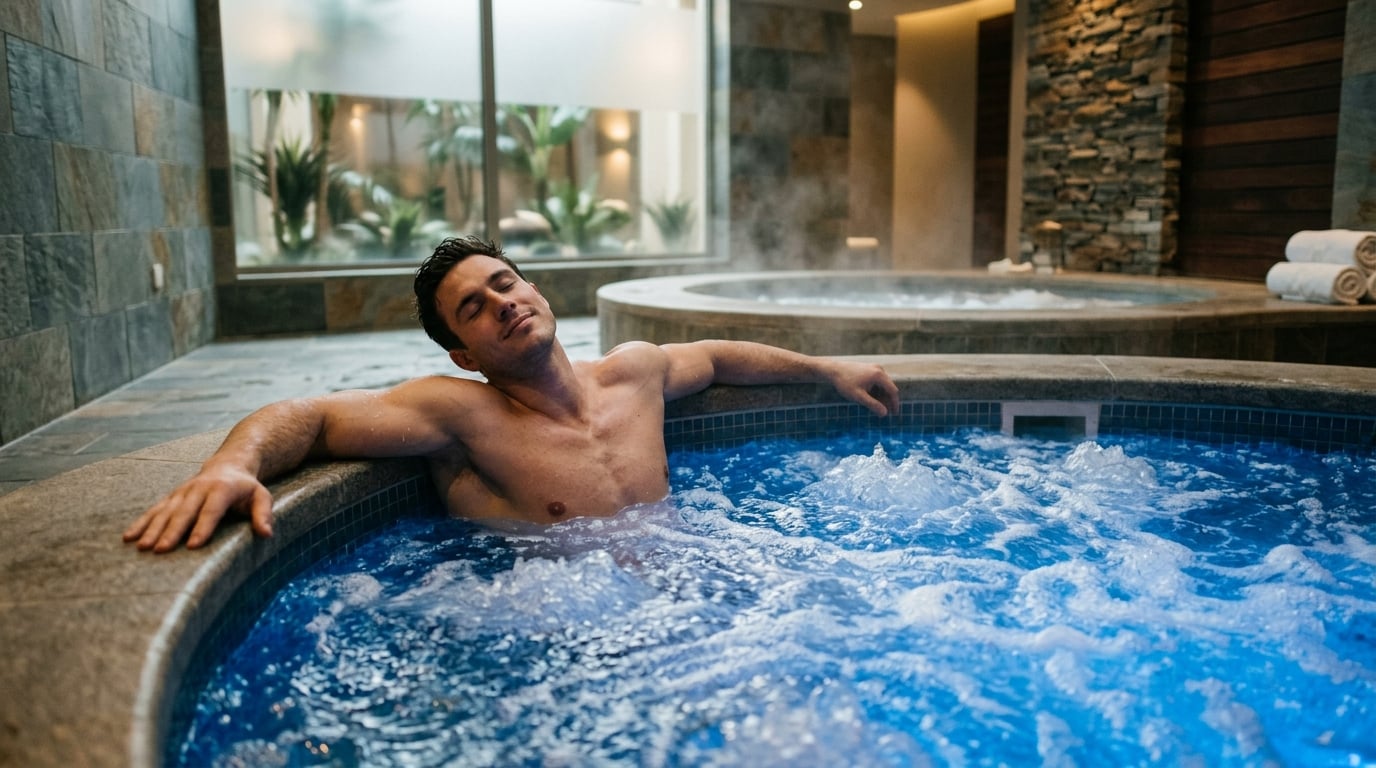
A typical oxygen immersion session runs the full body through a 50-minute soak in water warmed to roughly 96.8 to 100.4 degrees Fahrenheit, close to body temperature. The warmth helps relax muscle tissue and supports circulation while the stabilized oxygen works transdermally. This is delivered as a physician-supervised transdermal oxygen intervention rather than a passive spa treatment, with the session length designed to give oxygen enough contact time to move through the skin and into circulation.
What Athletes Actually Gain
The appeal for athletes comes down to three connected outcomes: clearing metabolic waste faster, feeling less sore, and getting back to full training sooner. Each of these ties directly back to how efficiently oxygen reaches working muscle tissue during the recovery window.
Faster Lactate Clearance
Improved oxygen delivery helps the body process and clear lactate more efficiently after intense exercise. Regular use of stabilized oxygen water has been associated with better oxygen saturation, which in turn supports lower lactic acid production and a smoother post-workout recovery curve. For athletes stacking training sessions close together, shaving time off lactate clearance can be the difference between showing up fresh and showing up depleted.
Reduced Delayed-Onset Muscle Soreness
Delayed-onset muscle soreness, commonly abbreviated DOMS, tends to peak between 24 and 48 hours after a hard workout, exactly when many athletes need to train again. Better oxygen delivery to the tissue during that window appears to blunt the intensity of that soreness, letting athletes return to full-effort training sooner rather than nursing stiff, fatigued muscles through a lighter session. This is one of the most commonly reported benefits among people using oxygen-based recovery methods.
Better ATP Output for Return-to-Training
ATP production and tissue repair rely on the same oxygen-dependent metabolic pathway, which means anything that improves oxygen availability tends to benefit both energy output and recovery simultaneously. More efficient ATP production supports mitochondrial function, the cellular engine responsible for turning fuel into usable energy. For athletes, that translates into feeling less drained heading into the next session and having more usable energy available once training resumes.
Comparing Oxygen Recovery Options
Athletes have several oxygen-based recovery tools to choose from, and each one delivers oxygen through a different mechanism, at a different cost, and with a different level of oversight.
Immersion vs. Hyperbaric Chambers
Hyperbaric oxygen therapy, or HBOT, delivers oxygen through pressurized inhalation, pushing arterial oxygen levels dramatically higher, up around 1,500 mmHg at 2.0 ATA. Some research suggests short courses of HBOT can reduce pain and support a faster return to play after soft-tissue injuries. HBOT sessions typically run $150 to $300 per session and require pressurized chambers with prescribed or clinic-based supervision. Water immersion therapy, by contrast, works through the skin rather than the lungs, avoids the pressure changes and mask discomfort some people find uncomfortable in a hyperbaric chamber, and is generally used for recovery support rather than as a prescribed medical treatment.
Immersion vs. Oxygen Bars and Hydrogen Water
Oxygen bars offer concentrated oxygen through inhalation for a novelty experience, usually priced by the minute, but they carry little supporting evidence and no medical oversight. Hydrogen water works through an entirely different mechanism, dissolving hydrogen rather than oxygen, and the research behind it is still considered emerging. Both fall into the category of consumer wellness products, whereas stabilized oxygen water immersion rests on a specific, measurable chemistry: a dissolved oxygen partial pressure that can be tested and compared, rather than a claim that has to be taken on faith.
Oxygen Delivery Determines Recovery Speed
The throughline across all of this is straightforward: recovery speed tracks closely with how efficiently oxygen reaches the tissue doing the repair work. Whether that oxygen arrives through the lungs, the skin, or a combination of both, the underlying biology stays consistent. Cells that get enough oxygen spend less energy regenerating, clear metabolic waste faster, and rebuild tissue more efficiently than cells running on an oxygen deficit.
For athletes evaluating recovery tools, the practical question is which delivery method fits a given training schedule, budget, and tolerance for medical oversight, since the science on oxygen’s role in recovery is well established. Stabilized oxygen water immersion provides a middle path between a full inhaled therapy like HBOT and a low-oversight consumer product like an oxygen bar, combining measurable oxygen concentration with a comfortable, non-pressurized session format.
For anyone ready to test how better oxygen delivery affects a personal recovery timeline, learning more about oxygen immersion therapy is a reasonable next step before the next hard training block.
Kure Health or KureOS
kenton@veracorgroup.com
+1 818 858 5551
621 S. Spring St.
Los Angeles
CA
90014
United States


