
Americans get an extra hour, but sleep just 11 minutes longer, as the Withings Sleep Care Service brings sleep specialists to all 50 states
PR Newswire
BOSTON, Oct. 29, 2026
New data from Withings reveals that Americans gain just 11 minutes of sleep when the clocks fall back, and even that small bonus doesn’t last: a week later, they’re sleeping less than usual and their sleep quality has dipped. As the days grow darker, maintaining regular sleep habits and knowing when to seek expert help becomes increasingly important. For those whose nights don’t bounce back, the Sleep Care Service in the Withings app connects users with licensed sleep specialists in all 50 states.
BOSTON, Oct. 29, 2026 /PRNewswire/ — On the night of Sunday, November 1, most of the United States switches to standard time and the clocks fall back one hour. But that extra hour translates into far less than an additional hour of sleep.
Withings analyzed nearly 240,000 nights in the United States between 2023 and 2025. On the night the clocks fall back, Americans sleep an average of just 11 minutes longer than on a typical Saturday, and that night is more broken than usual, with slightly more frequent night wake-ups. The small bonus is quickly lost: through the following week, Americans get up about 25 minutes earlier each morning while sleeping slightly less, and by the next Saturday they sleep around four minutes less than usual, with a lower sleep score.
The effect is similarly modest in Europe, where people gain between 10 and 15 minutes of sleep when their clocks go back a week earlier.
Easy access to a sleep specialist in all 50 states
When post-time-change fatigue doesn’t fade, it may not be the clock – it may signal an underlying sleep issue. Yet getting answers to poor sleep has traditionally meant months of referrals, long sleep lab waitlists and multiple follow-up appointments before treatment even begins.
Withings’ new Sleep Care Service1, available in the Withings app to users in all 50 US states, replaces that process with a single virtual care pathway. Through clinical partners Dreem Health and Dune Health, users get access to licensed sleep specialists, at-home testing, and personalized treatment in weeks rather than months. The service combines at-home sleep tracking with telemedicine and is covered by most insurance plans.
The Sleep Care Service is designed for anyone experiencing persistent fatigue, recurring sleep disturbances, or concerns about sleep apnea. Getting started takes minutes: from the Share tab in the Withings app, users complete a three-minute assessment and book an appointment.
From there:
- A virtual sleep specialist. A licensed sleep provider reviews their health history and sleep symptoms and recommends the best next steps for diagnosis and treatment.
- At-home sleep testing. When prescribed, a home sleep test offers clinical data to better understand what’s going on.
- A personalized treatment plan. Where clinically appropriate, for example if sleep apnea or another sleep disorder is diagnosed, with options ranging from CPAP and oral therapy devices to insomnia treatment.
Autumn darkness puts new demands on our sleep habits
The clock change comes just as the United States enters the darkest part of the year. On Sunday, the sun will set in New York at around 4:50 p.m., an hour earlier by the clock than the day before, and by the winter solstice it will set around 4:30 p.m. For Dr. Pierre Escourrou, the transition is a reminder of how light, darkness and our daily routines are connected to sleep.
“We can’t expect the body to automatically use the extra hour for sleep. Our internal clock is set by light and by habit, and it doesn’t move overnight just because the clocks do. As the evenings get darker, keeping regular routines and getting daylight, especially in the morning, matters even more.”
Dr. Pierre Escourrou, Cardiologist & Sleep Specialist
The extra sleep is short-lived
Withings’ data also shows that the change doesn’t end with the night the clocks fall back. In the week after the change, Americans kept waking up around 16 minutes earlier and going to bed around 15 minutes earlier according to the clock. On the following Saturday, they slept around four minutes less than usual, with a slightly lower sleep score, though sleep quality was back to its pre-change level over the following two weeks.
For anyone looking to improve their sleep, understanding habits over time can therefore be more useful than focusing on a single night.
“Sleep naturally varies from night to night, so one bad night doesn’t mean very much. What matters is the pattern over time. Tracking your sleep helps you see how bedtimes, daylight and daily routines relate to how you sleep, and if poor sleep persists for weeks, that’s a reason to talk to a doctor.”
Dr. Pierre Escourrou, Cardiologist & Sleep Specialist
How to give your sleep better conditions during the darker months
- Keep regular hours. Try to go to bed and, above all, wake up at roughly the same time every day.
- Seek out daylight. Make the most of the daylight hours and try to get outside, preferably in the morning.
- Look at the trend, not a single night. Tracking your sleep over time makes it easier to identify recurring patterns and see how changes in everyday life coincide with changes in your sleep.
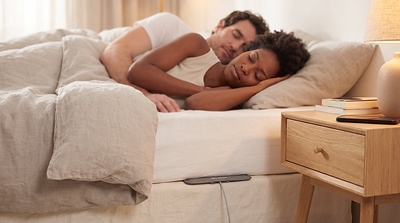
The Withings Sleep Mat, placed under the mattress, and ScanWatch 2, worn on the wrist, record sleep night after night. With Withings+, those nights become trends and personalized insights, and if they point to something more, the Sleep Care Service puts a specialist a few taps away.
How the United States compares when the clocks go back
|
Country |
Extra sleep* |
|
Italy |
+15 min |
|
Spain |
+14 min |
|
France |
+14 min |
|
Sweden |
+12 min |
|
United Kingdom |
+12 min |
|
Germany |
+12 min |
|
United States |
+11 min |
|
Finland |
+11 min |
|
Denmark |
+10 min |
|
Norway |
+10 min |
*Night of the clock change compared with each person’s usual Saturday night, after subtracting the change seen in places whose clocks never change. European clocks change one week before US clocks.
How America’s largest cities sleep when the clocks go back
|
City |
Nights measured |
Extra sleep* |
|
New York |
8,800 |
+9 min |
|
Los Angeles |
3,600 |
+10 min |
|
Washington, D.C. |
3,300 |
+12 min |
|
Houston |
1,700 |
+16 min |
|
San Diego |
1,700 |
+15 min |
*Same basis as the table above.
About the study
- Data: anonymized sleep data from Withings users aged 18 and over in the United States, recorded by Withings sleep trackers and connected apps.
- Period: the autumn clock changes of November 5, 2023, November 3, 2024 and November 2, 2025.
- Sample: 237,480 nights of the clock change. Each person counts once for every year they were measured.
- “Typical Saturday”: for each person, the average of their four Saturday nights before the change (at least two of them measured).
- Weeks after: days 1–7 and 8–14 after the change, compared with the 14 days before.
- Comparison group: the same dates in places whose clocks never change (Arizona, Hawaii and Iceland), to separate the clock change from season and calendar effects. Their change on the same night, about 2.8 extra minutes of sleep, is subtracted from the figures above.
- Exclusions: people whose time zone changed during the six weeks studied, for example through travel.
- Limits: observational data showing associations, not causes; results describe Withings users, not the whole population.
Full study data: See here
About Withings
A pioneer in real-life health monitoring, Withings created the first connected scale in 2009 and has continually innovated since then to offer an ecosystem of clinically validated connected objects, used by 12 million people worldwide, as well as by numerous renowned healthcare centers and research institutes. The Withings ecosystem measures over 90 biomarkers. It includes a sleep analyzer that detects sleep cycles, wake phases, and sleep apnoea. It also features hybrid connected watches that notably track heart rate and its variations day and night, perform a medical-grade electrocardiogram to detect pathologies like atrial fibrillation, or monitor blood oxygenation. Its connected blood pressure monitors allow for home monitoring of blood pressure evolution, thanks to sharing reliable and exhaustive measurement reports with a doctor, and can integrate a stethoscope for at-home recording of heart sounds that can be shared with a healthcare professional.
Disclaimers
1The Sleep Care Service is available in the United States only. Care is provided by Dreem Health and Dune Health, depending on state availability.
About Dreem Health
Dreem Health is a 100% virtual sleep clinic designed to test, diagnose, and treat common sleep disorders entirely from home. The clinic’s virtual care pathway and home sleep test are designed to remove barriers in today’s sleep healthcare system, thus creating a faster route for patients to reclaim their energy and improve their health.
About Dune Health
Dune Health combines doctors, wearable data and AI to deliver personalized care for sleep, weight and blood pressure. Care goes beyond doctor visits: regular check-ins and coaching keep patients engaged, while treatment plans evolve with their health data and progress, all from home. Learn more at heydune.com.
Press contact
Alex McKechnie
alex.mckechnie@12080group.com
475.399.4056

 View original content to download multimedia:https://www.prnewswire.com/news-releases/americans-get-an-extra-hour-but-sleep-just-11-minutes-longer-as-the-withings-sleep-care-service-brings-sleep-specialists-to-all-50-states-302924031.html
SOURCE Withings


